Perdana
1/ Perdana is one the PLC within BMQ50 index. So what does quality actually means in the context of a business? You see, the hardest test for a business isn’t always a market crash. Sometimes, it is just a plateau.

2/ In 2024 and early 2025, global oil hovered around $69 a barrel. That is not a disaster for oil majors, but it isn’t enticing enough to trigger massive new spending. So, clients simply delayed their offshore projects.
3/ At the exact same time, ESG mandates quietly choked off bank lending to the fossil fuel industry. You cannot easily borrow money to build a new vessel today, and you cannot rely on banks to bridge the gap when your ships are idle.
4/ For offshore vessel owners with heavy fixed costs, this waiting game is dangerous. The easy choice is to panic, drop your charter rates, and take on low-margin work just to keep revenue flowing.
5/ If you look at Perdana Petroleum’s (PPB) latest 2025 Annual Report, you can see exactly how they reacted. Their revenue plunged by 36%, dropping to RM 279 million.
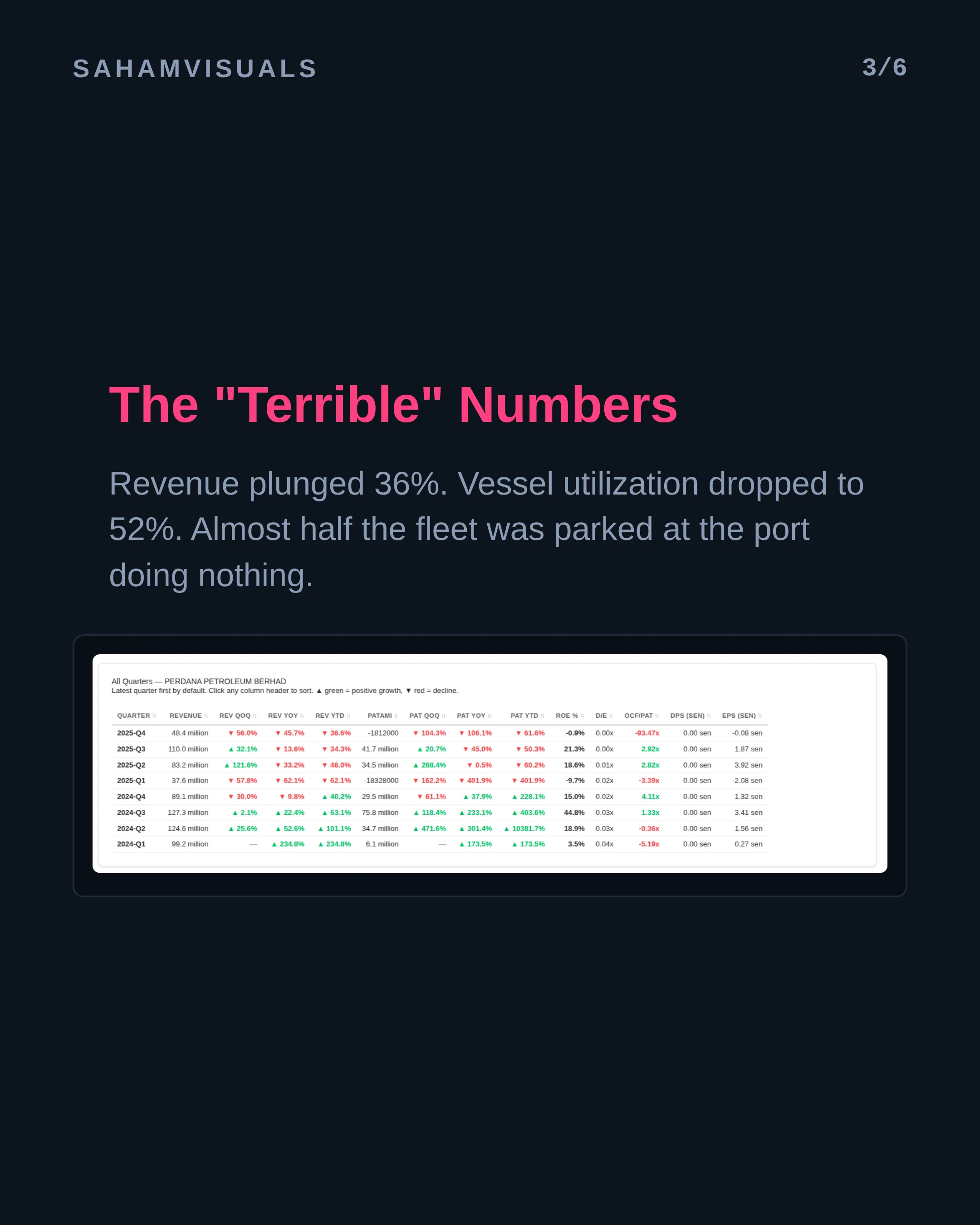
6/ Their vessel utilization rate dropped to 52%. Almost half their fleet of offshore support vessels was parked at the port, doing absolutely nothing.
7/ So how did the business react to running at half capacity while the banks shut their doors? They didn’t break.
8/ Despite running an asset-heavy business with idle ships during a stagnant market, Perdana generated RM 58 million in actual profit.
9/ Most importantly, they grew their cash pile to RM 161.1 million. They achieved this by maintaining strict discipline on their charter rates and refusing to subsidize client delays.
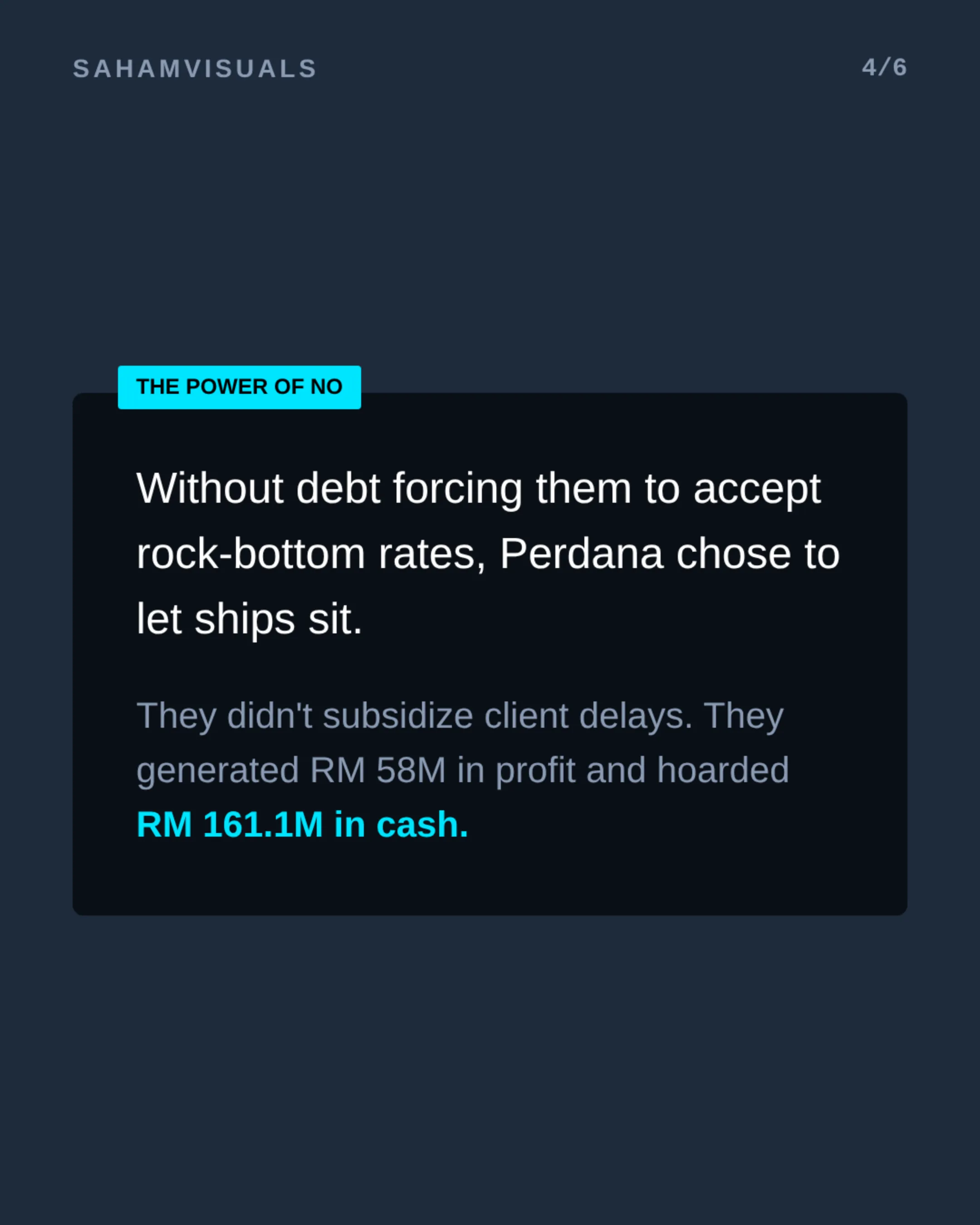
10/ In the offshore business, debt forces you to make bad decisions. If you owe the bank money, you have to deploy your ships at rock-bottom rates just to generate cash flow.
11/ Cash gives you the power to say “no”. Perdana chose to hoard cash. Because when ESG mandates mean the banks won’t lend to you, the cash on your balance sheet is the only thing that keeps the fleet alive.
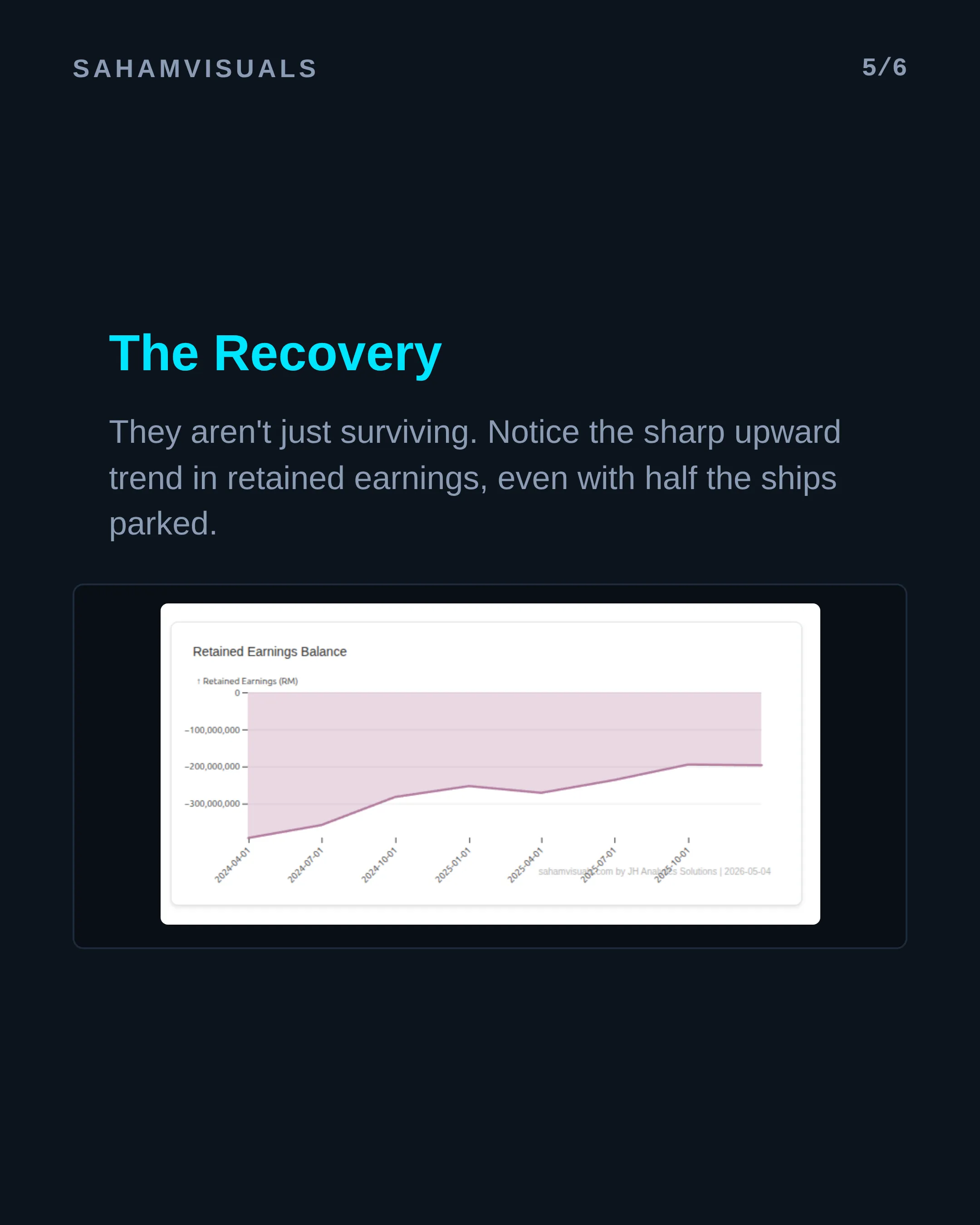
12/ They didn’t need a booming crisis to be profitable. They just needed discipline during the boring, stagnant periods.
13/ You have now read how this company survives when half its assets are doing nothing. The question is: does a business that chooses idle ships over unprofitable work make sense to you?